What Causes Dark Circles Under Your Eyes? Causes & Fixes
Dark circles are frustrating because they don’t have a single cause — and the fix that works for one person does nothing for another. Below we break down every common reason for dark under-eyes, how to tell which one is yours, and what actually helps for each.
The main causes of dark circles
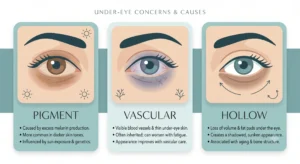
1. Genetics & thin skin
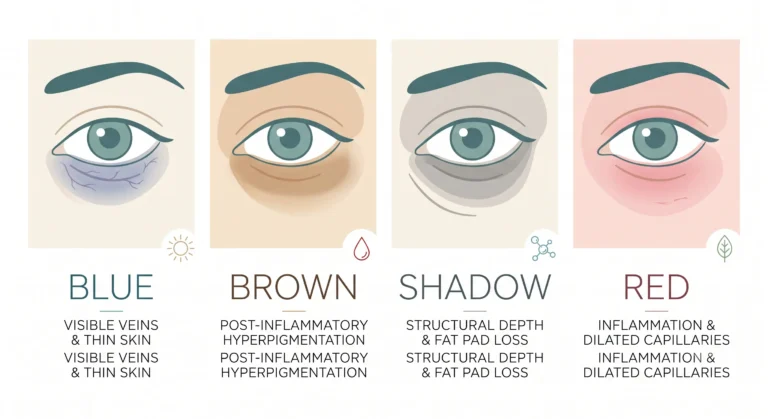
The skin under your eyes is the thinnest on your body. For many people — especially those who inherited naturally thin or fair under-eye skin — the blood vessels beneath show through as a bluish or purple tint. This is the most common cause, and it’s largely hereditary, which is why some people have dark circles no matter how much they sleep.
2. Pigmentation (hyperpigmentation)
Sometimes the darkness is actual brown pigment in the skin, caused by excess melanin. This is more common in medium-to-deep skin tones and can be worsened by sun exposure, rubbing the eyes, or conditions like melasma. Unlike vascular circles, pigment-type circles look brown and don’t fade when you stretch the skin.
3. Volume loss & hollowing (the tear trough)
As we age, we lose fat and collagen around the eyes, creating a hollow or groove (the tear trough). This casts a shadow that reads as a dark circle even when there’s no pigment or visible vessel at all. If your circles look worse in overhead light and improve when you tilt your face up, shadowing from hollowing is likely the cause.
4. Allergies & eczema
Allergies release histamine, which dilates and congests the blood vessels under the eyes — the so-called “allergic shiners.” Rubbing itchy eyes makes it worse by triggering both inflammation and pigmentation over time.
5. Fatigue, dehydration & lifestyle
Poor sleep makes skin paler, so the vessels underneath stand out more. Dehydration, high salt intake, alcohol and smoking all worsen the look — smoking and alcohol by stressing and dehydrating the skin, salt by encouraging puffiness. These rarely cause dark circles on their own, but they amplify whatever tendency you already have.

6. Sun exposure
UV exposure increases melanin production, which deepens pigment-type circles. This is why daily SPF around the eyes is one of the most underrated steps for keeping dark circles from getting worse.
How to tell which type you have
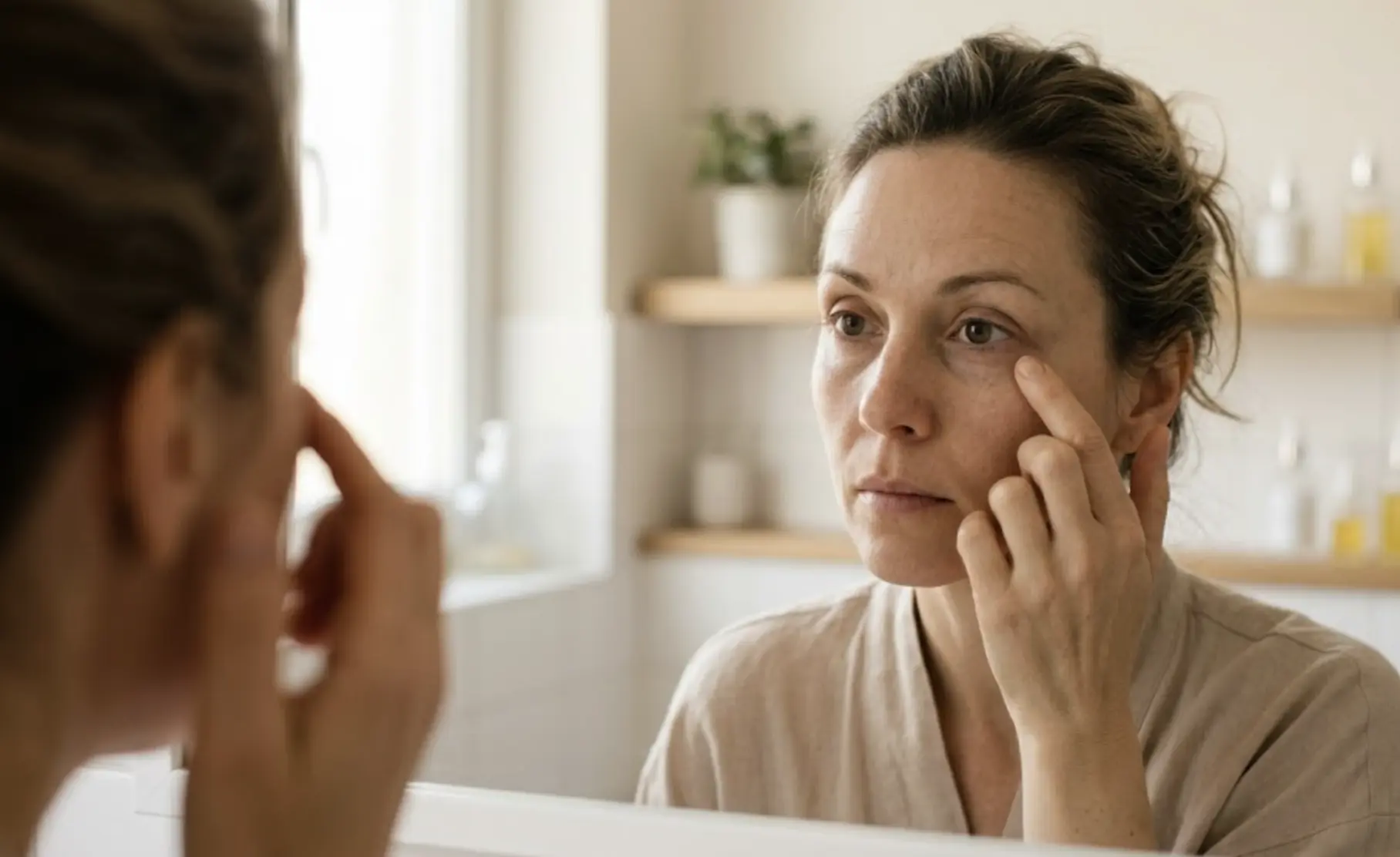
A quick at-home test: gently pull the skin under your eye downward and watch what happens.
- Colour stays or goes browner → pigmentation
- Colour looks blue/purple and fades when stretched → vascular / thin skin
- A shadow or groove that doesn’t change colour → hollowing / volume loss
Many people have a mix of two. Knowing your type is the single most useful thing you can do, because it decides which ingredients will actually work for you.
What actually helps (by cause)
- Pigment: vitamin C, niacinamide, retinol, and daily SPF to stop it worsening
- Vascular/thin skin: caffeine (constricts vessels), peptides and retinol (thicken skin over time), hydration
- Hollowing: plumping, collagen-supporting formulas with peptides — and for deep hollows, in-office options like filler
- Allergies: treat the allergy itself and stop rubbing; the circles often fade with it
Once you know your type, the right product makes a real difference. We tested and ranked the strongest options for each concern in our guide to the best eye creams for dark circles. If your main issue is a sunken, shadowed look, see our piece on how to soften hollow under-eyes without filler.
When to see a professional
If your dark circles appeared suddenly, affect only one eye, or come with swelling or other symptoms, see a doctor to rule out an underlying cause. For stubborn hollowing or deep pigment that creams don’t budge after a couple of months, a dermatologist can advise on treatments like lasers, peels or filler.
Frequently asked questions
Are dark circles permanent?
Not usually. Pigment and vascular circles can be improved with the right ingredients and sun protection. Structural circles from bone shape or deep hollowing are harder to change with creams alone but can be softened.
Does lack of sleep really cause dark circles?
Sleep loss makes skin paler and can cause fluid to pool, both of which make existing circles look worse. It’s an amplifier rather than the root cause for most people.
Can I get rid of dark circles naturally?
Good sleep, hydration, allergy control, daily SPF and a cool compress for puffiness all help. For pigment or thin-skin circles, you’ll usually need a targeted active like vitamin C or caffeine to see real change.
By Melissa Mapira. Reviewed for accuracy by Natasha Johnson MD. This article is for information only and isn’t medical advice.
Related: Best eye creams for dark circles · Hollow under-eyes without filler · Best for mature skin