What Your Dark Circle Colour Means (Blue, Brown, Purple & Grey)
The colour of your dark circles is the biggest clue to what’s causing them — and to which ingredients will actually fix them. Blue, purple, brown and shadowy-grey circles each have a different cause and a different solution. Here’s how to read yours in under a minute.
The 60-second stretch test
Before reading on, do this: in good light, gently pull the skin under one eye downward and slightly out. Watch the colour. If it fades, your circles are vascular (blood vessels showing through). If it stays or looks browner, it’s pigment in the skin itself. If there’s no colour change but a shadow remains, it’s hollowing. Now match your result below.
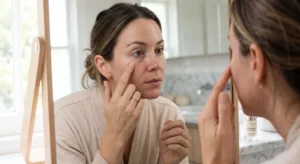
Blue or purple dark circles
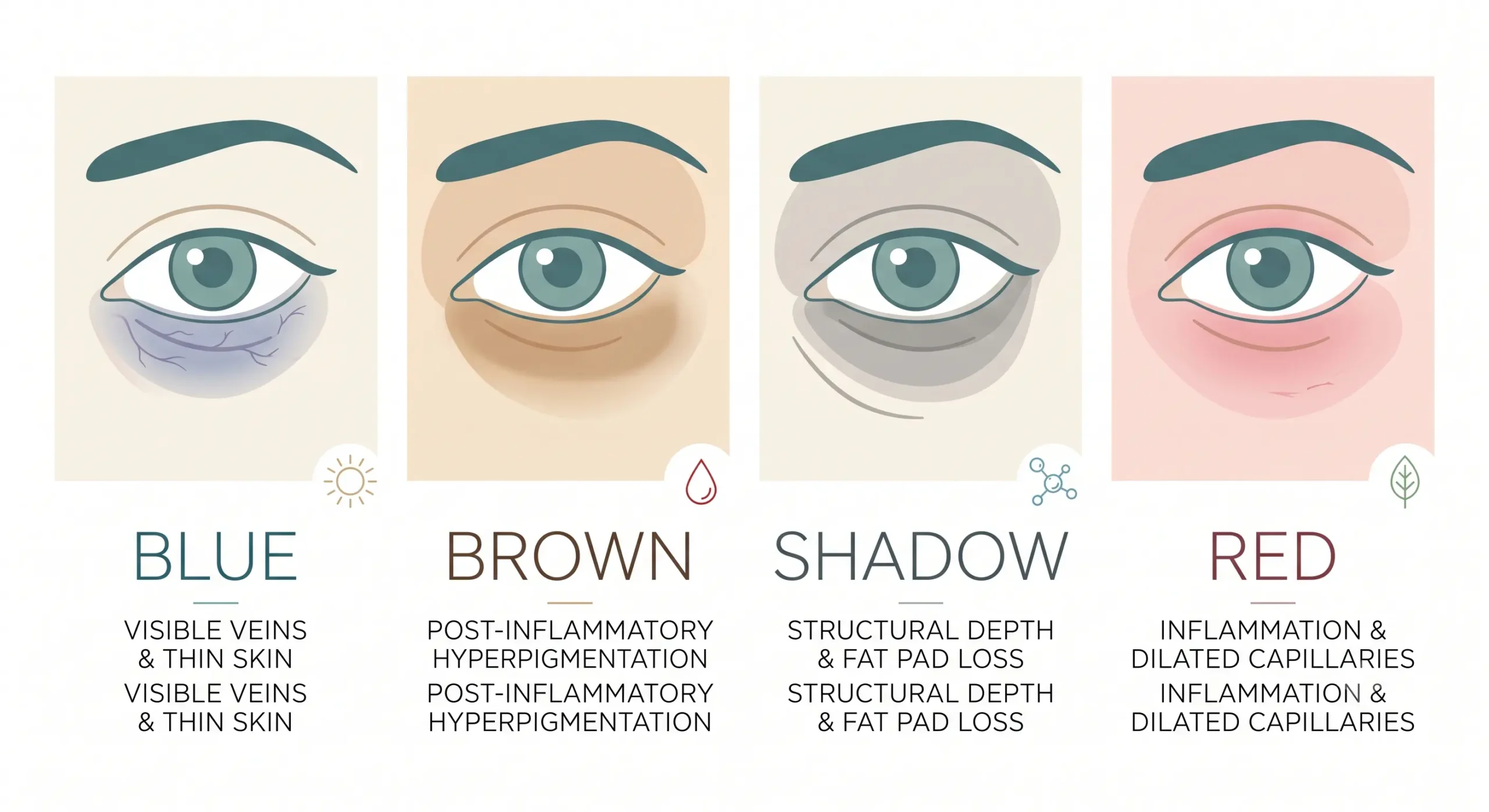
What it means: the skin under your eyes is thin enough that the network of blood vessels beneath shows through as a bluish-purple tint. This is the most common type, it’s largely genetic, and it gets more visible when you’re tired, dehydrated or congested (poor sleep makes skin paler, so the vessels stand out more).
What helps: caffeine in the morning to constrict the vessels, peptides and retinol over time to thicken the skin, and consistent hydration. Cold compresses give a quick temporary lift.
Brown dark circles
What it means: this is true hyperpigmentation — excess melanin in the skin itself. It’s more common in medium-to-deep skin tones and is worsened by sun exposure, rubbing the eyes (allergies are a frequent trigger) and inflammation. Unlike vascular circles, brown circles don’t fade when you stretch the skin.
What helps: brightening actives — vitamin C, niacinamide and gentle retinol — plus daily SPF, which is non-negotiable: without sun protection, pigment keeps rebuilding faster than any cream can fade it. Stop rubbing your eyes; treat the allergy if that’s the trigger.
Grey or shadowy circles (no real colour)
What it means: if the darkness looks like a shadow that changes with lighting — worse under overhead light, better when you tilt your chin up — it’s not colour at all. It’s a hollow (the tear trough) casting a shadow, usually from age-related volume loss or inherited face structure.
What helps: plumping, collagen-supporting formulas (peptides, adenosine, rich hydration) soften the groove; light-reflecting concealer hides it instantly; deep structural hollows respond best to professional treatments. We covered every non-invasive option in our guide to softening hollow under-eyes without filler.
Red or pink under-eyes
What it means: redness usually points to irritation, allergies or eczema rather than classic dark circles. Histamine dilates the vessels and rubbing inflames the skin — the combination can leave the area pink, itchy and puffy.
What helps: treat the cause — antihistamines for allergies, a gentle fragrance-free routine for irritation — and avoid actives like retinol until the skin calms. If redness persists or comes with swelling, see a doctor.
Colour-by-colour cheat sheet
| Colour | Likely cause | Key ingredients |
|---|---|---|
| Blue / purple | Thin skin, visible vessels | Caffeine, peptides, retinol |
| Brown | Hyperpigmentation | Vitamin C, niacinamide, SPF |
| Grey / shadow | Hollowing (tear trough) | Plumping peptides, adenosine |
| Red / pink | Allergy or irritation | Treat the cause first |
Once you know your colour and cause, choosing a product gets much easier — we ranked the strongest option for every type (vascular, pigment and hollowing) in our tested guide to the best eye creams for dark circles. If you’re over 40 and fighting several of these at once, see our picks for mature skin.
Frequently asked questions
Why are my dark circles purple?
Purple circles mean the blood vessels under your thin under-eye skin are showing through. It’s usually genetic and looks worse with fatigue and dehydration. Caffeine, peptides and retinol are the go-to ingredients.
Can brown dark circles go away?
They can fade significantly with consistent brightening actives (vitamin C, niacinamide, retinol) and daily SPF — expect six to eight weeks for visible change. Without sun protection they usually return.
Do dark circle colours mean a health problem?
Usually not — most dark circles are cosmetic. See a doctor if circles appear suddenly, affect one eye only, or come with swelling, pain or other symptoms.
By Melissa Mapira. Reviewed for accuracy by Natasha Johnson MD. This article is for information only and isn’t medical advice.
Related: What causes dark circles · Best eye creams for dark circles · Hollow under-eyes without filler